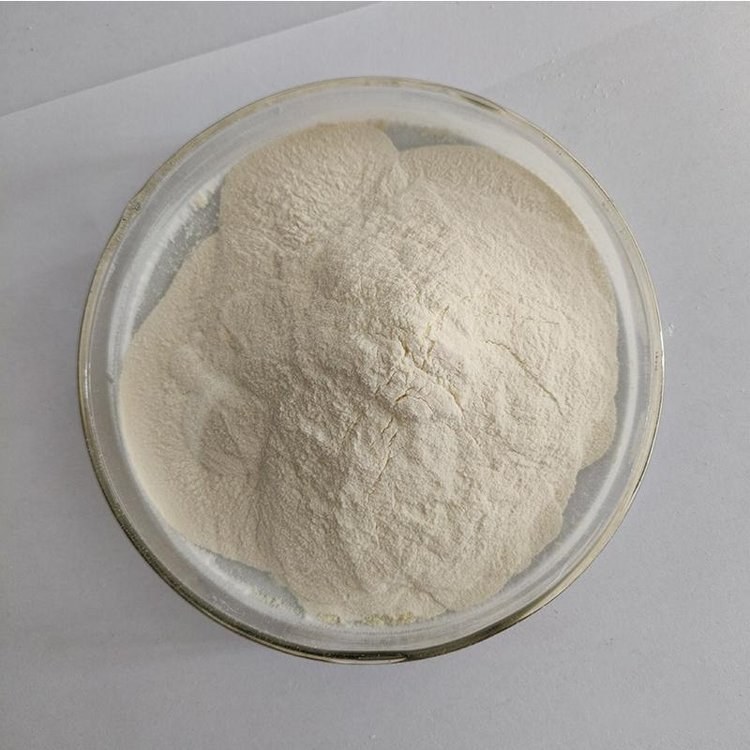
Selenium Carrageenan Powder Organic Selenium 2%-3% Water Soluble Food Grade
Organic selenium carrageenan, molecular-bonded, water soluble, total Se 2%-3%
Specifications
- Product name
- Selenized Carrageenan
- Synonyms
- Se-carrageenan; Selenium Carrageenan
- Total selenium
- 2%, 2.5%, 3% or custom spec.
- Classification
- Organic selenium
- Solubility
- Water soluble
- Certificates
- COA, MSDS, GMP, non-GMO, halal, etc.
- MOQ
- 1 kg
- Shelf life
- 24 months
1. What Selenium carrageenan actually is
Start with the seaweed. Carrageenan is a sulfated polysaccharide extracted from red seaweed — mostly Eucheuma cottonii — and you already know it as a gelling and stabilising agent in food. Selenium carrageenan takes that same polysaccharide and bonds selenium into the chain, so you get one ingredient carrying two functions: the texture properties of carrageenan and a source of the trace mineral selenium.
The bonding method matters. There are two ways to get selenium into a polysaccharide. The cheap way is to blend a selenium salt with carrageenan powder and call it a day. The proper way is molecular substitution under controlled conditions, where selenium is chemically bonded into the polysaccharide structure. The first method gives you a mix. The second gives you a compound. They look identical in a drum, and they behave very differently in a body.
This is why we push buyers to ask for a selenium speciation test rather than just a total selenium figure. Total Se tells you how much selenium is in the powder. Speciation tells you what form it is in, and therefore how much of it your customer can actually absorb. A batch at 30 mg/kg total Se where only 60% is organic is a weaker product than a batch at 25 mg/kg where 95% is organic, even though the first number looks better on a label.
2. Organic vs inorganic selenium, and why it decides your price
Almost every purchasing conversation about this ingredient comes back to one question: why not just buy sodium selenite? It is cheaper, the selenium content is far higher, and it does the same job on paper. Here is the honest answer.
Inorganic selenium — selenite and selenate — is absorbed in the 40–50% range and has a narrow gap between the dose you need and the dose that causes problems. Published comparisons put inorganic selenium at up to 40 times the toxicity of organic forms. Several developed markets have restricted or phased out simple inorganic selenium salts in supplements and food fortification for exactly this reason.
Organic selenium is absorbed at roughly 85–95% and clears from the body more gradually, which means steadier blood selenium levels and a much wider safety margin. That difference is what you are paying for. It also means your label can legally say "organic selenium" in most markets, which inorganic forms cannot.
3. How it compares with selenium yeast and selenium protein
If you are sourcing organic selenium, you are usually choosing between three families: selenium yeast, selenium protein (selenomethionine-type), and selenium polysaccharide like our product. Buyers ask us which is best. The honest answer is that they are not interchangeable, and the right pick depends on your format.
Selenium yeast — the market default. Well documented, widely accepted, and cost-effective at scale. Two drawbacks: batch-to-batch consistency is harder to control because the selenium is biologically incorporated, and the yeast matrix can carry an odour and colour that some formulations do not want.
Selenium protein / selenomethionine — clean and well characterised, often the choice for pharma-grade work. Production is slower and more expensive, and supply is tighter.
Selenium carrageenan — chemically synthesised, so batch consistency is easier to hold. It is fully water-soluble, essentially odourless, and carries the polysaccharide function as a bonus. That solubility is the practical advantage: it drops into drinks and powder mixes that selenium yeast cannot handle cleanly.
Where selenium carrageenan loses is track record. Selenium yeast has decades of human data and is listed in more regulatory frameworks. Selenium carrageenan is well established in China — it is a permitted food nutrition enhancer under GB 14880 and has its own national standard, GB 1903.23-2016 — but its acceptance elsewhere is still building. If your target market is the EU or US and the product is a novel format, check the regulatory route before you buy, not after. We will tell you what we know and flag what we don't.
4. Reading the specification like a buyer, not a formality
The specification sheet is where most sourcing mistakes hide. Four numbers deserve real attention.
Total selenium, reported in mg/kg. The Chinese national standard sets a range of 15–40 mg/kg for food use. Higher-concentration grades — 2%, 2.5%, 3% — exist for feed and special applications. Confirm which scale your supplier is quoting on, because mg/kg and percent are three orders of magnitude apart and we have seen both used in the same email thread.
Organic selenium ratio. The standard requires ≥90% of total selenium to be organic. Anything below that is either off-spec or, worse, an inorganic salt dressed up as an organic ingredient. This is the single most faked number in the category.
Lead and heavy metals. Lead is capped at 2.0 mg/kg under GB 1903.23-2016. Seaweed-sourced material can carry arsenic and cadmium from the growing water, so ask for the full heavy-metal panel, not just lead.
Moisture. Capped at 6%. Water is weight you are paying for and shelf life you are losing. Batches above 5% will cake in storage.
5. Where the powder ends up
Selenium carrageenan is not one market, and the same 25 kg drum can serve five very different customers. Each one cares about different parts of the spec.
Selenium supplement capsules and tablets — the mainstream. Usually the standard 15–40 mg/kg grade, dry handling, most cost-sensitive.
Powder blends and functional beverages — where water solubility earns its keep. No grit, no odour, blends clean.
Functional food and bakery — selenium-fortified bars, gummies and dairy. Needs food-grade documentation and a clean heavy-metal panel.
Animal feed and aquaculture — higher Se loadings, larger volumes, price-driven. A different regulatory framework applies.
R&D and formulation trials — small quantities, sometimes custom Se loading, often with speciation data required.
Tell us the end use when you enquire. It changes the grade we quote, how we pack it, and which certificates you need. It also stops you paying for a food-grade certificate on a feed order.
6. The verification problem, stated plainly
Selenium is expensive, and the ratio of organic to inorganic selenium is invisible to the eye. That combination is an invitation to cheat, and the market takes it.
The common tricks are not sophisticated. Inorganic selenite blended into carrageenan and sold as organic. A true organic batch diluted with a cheap filler to stretch the volume. Total selenium reported as if it were organic selenium. Old stock re-drummed with a new production date. None of these are caught by a nice-looking certificate, because the certificate is generated by the same party doing the blending.
What actually protects you is a speciation test on a sealed sample, run by a lab you chose, using the anhydrous ethanol extraction method in the GB 1903.23-2016 appendix or an equivalent LC-ICP-MS method. Organic selenium is calculated from the difference between total and inorganic selenium. We will supply the speciation data for your batch, and we actively encourage you to have it independently confirmed. A supplier who resists that request is answering your question.
7. How Xi an Jianyuan Biotechnology work as a supply-chain integrator
We are a trader. We do not run a reactor, and we will not dress that up. What it means for you is that we are not tied to one plant's good week or bad month. We qualify several selenium carrageenan lines, keep the ones that hold their specs, and stop buying from the ones that drift.
In practice you get four things. A specification matched to your end use rather than a generic sheet. A batch sample tested before the bulk ships. The document set your market actually requires — COA, MSDS/SDS, GMP statement, non-GMO and halal on request — prepared properly rather than a boilerplate pack. And logistics that fit reality: 1 kg foil bags for pilot runs, 25 kg fibre drums for production, air or sea, with sealed moisture-barrier packing because this powder is hygroscopic.
Lead time is normally 7–15 days ex-stock for standard grades, longer for custom selenium loadings. If your launch date is fixed, tell us early. Rush orders are sometimes possible; claiming they are always possible would be a lie.
FAQ
Q: Does selenium carrageenan have a CAS number?
A: No single one. It is a reaction product, not a pure compound, so it is defined by total selenium content, organic selenium ratio and the parent carrageenan grade. Treat a supplier who quotes one CAS and a purity percentage with caution.
Q: What selenium content can you ship?
A: Standard food-grade material at 15–40 mg/kg total Se, and higher-loading grades at 2%, 2.5% and 3% for feed and special applications. Custom loadings are possible on larger orders.
Q: How do you prove the selenium is organic?
A: Speciation testing on a sealed batch sample, using the anhydrous ethanol extraction method from GB 1903.23-2016 or an equivalent LC-ICP-MS method. We supply the data and welcome independent verification.
Q: Is it approved for food use?
A: In China, yes — it is a permitted food nutrition enhancer listed under GB 14880, with its own national standard GB 1903.23-2016. Acceptance in other markets varies, so confirm the route for your destination before ordering.
Q: How is it packed?
A: 1 kg aluminium foil bag or 25 kg fibre drum with double PE liner, with moisture-barrier packing. Custom packing and private-label drums on request.
Q: Can I get a sample?
A: Yes — 20 g for evaluation or 1 kg for pilot production. You cover freight; we deduct it from your first production order.
8. Storage, handling and ordering
Keep it sealed, cool, dry and out of direct light. Humidity below 50% is the target — selenium carrageenan is hygroscopic and takes on water readily, which is why moisture-barrier packing matters more here than for a typical botanical powder. Shelf life is 24 months stored correctly. Once a drum is opened, reseal it properly and use it within a reasonable window.
To quote accurately we need four things: the selenium content or grade you need, the volume, the end use, and the destination port. If you have a target price, share it — it tells us which line to source against and saves a round of emails. Samples of selenium carrageenan are available from 20 g for evaluation or a full 1 kg for pilot production.