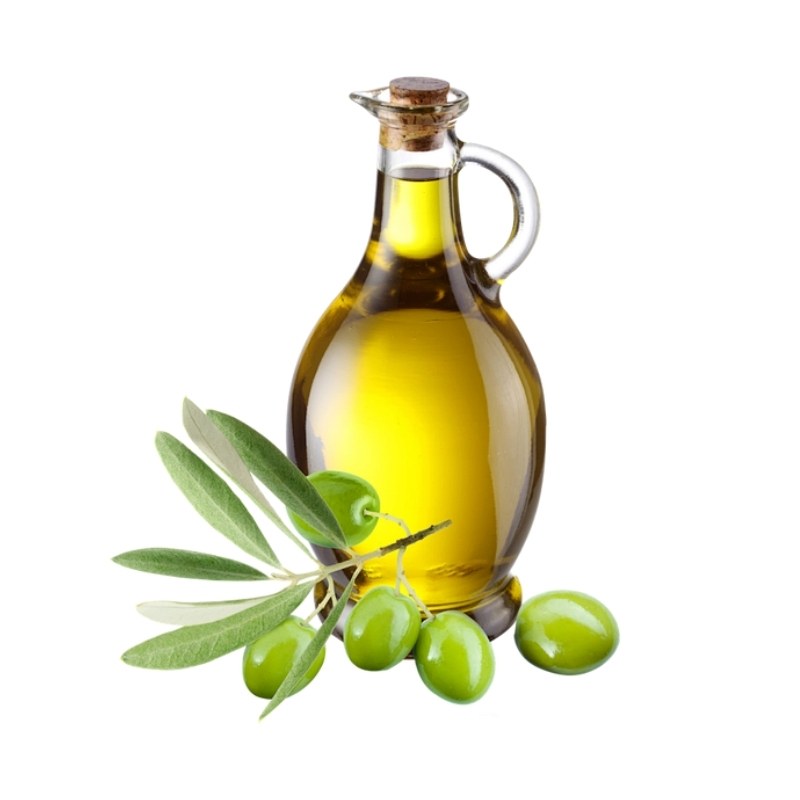
100% Pure Natural Olive Oil Extra Virgin & Refined Food Cosmetic Grade Bulk Wholesale
Extra virgin to refined olive oil, bulk & wholesale, food & cosmetic grade
Specifications
- Product Name
- Natural Pure Olive Oil
- Synonym
- Olea Europaea Fruit Oil
- Plant Source
- Olea europaea L.
- Used Part
- Fruit (olive pulp)
- Specification
- Extra Virgin Olive Oil, Virgin Olive Oil, Refined Olive Oil, Olive Pomace Oil
- Test Method
- HPLC
- Product Grade
- Food Grade; Cosmetic Grade
- Certificate
- ISO9001; Halal; FDA; Reach; COA; MSDS; etc.
- Classification
- Edible vegetable oil
- MOQ
- 20 kg
- Shelf Life
- 24 Months
1. Product Overview — What Is Natural Pure Olive Oil?
Natural pure olive oil is oil obtained solely from the fruit of the olive tree (Olea europaea) by mechanical means, with no chemical solvents, no additives and no blending with other vegetable oils. It is a fruit oil — pressed from the pulp — not a seed oil. For food manufacturers, foodservice operators, private label brands and cosmetic producers, bulk olive oil delivers Mediterranean positioning, high monounsaturated fat and a clean-label story that seed oils cannot match.
Xi'an Jianyuan Biotechnology supplies wholesale olive oil programmes worldwide — from single-drum trials to full container loads and annual contracts. Every lot is shipped as bulk olive oil in the packaging you need, with a batch COA and full traceability from mill to tank.
Botanical Identity & Available Grades
Botanical source: Olea europaea — oil pressed from the fruit pulp (a fruit oil, not a seed oil)
Extraction: mechanical only — crushing, malaxation and centrifugation/decanting; no hexane or chemical solvents
Cold extraction: malaxation below 27°C (80°F) to qualify as “cold extracted”
Standards: IOC trade standard and EU Regulation; USDA grading for the US market
Grades supplied: Extra Virgin Olive Oil, Virgin Olive Oil, Refined Olive Oil, Olive Pomace Oil
Process Flow (Harvest to Bulk Tank)
| Step | Process | Quality control point |
| 01 · Harvest | Olives picked at target ripeness; moved to mill within hours | Time-to-mill drives free acidity |
| 02 · Washing & Crushing | Leaves removed, fruit washed, crushed with pits into paste | No foreign matter |
| 03 · Malaxation | Slow mixing 20–60 min below 27°C | Cold extraction claim; aroma retention |
| 04 · Separation | Centrifugation / decanting — oil separated from water & solids | No chemical solvents |
| 05 · Filtration & Storage | Filtered, stored in dark stainless tanks under nitrogen blanket | Protects against oxidation & light |
2. Grades, Specifications & Packaging
Olive oil is graded by enforceable chemical and sensory limits — not marketing language. The table below reproduces the IOC / EU reference limits by grade.
IOC / EU Grade Limits at a Glance
| Grade | Free acidity (oleic) | Peroxide value | K232 / K270 | Sensory (median defect) |
| Extra Virgin (EVOO) | ≤ 0.8% | ≤ 20 mEq O₂/kg | ≤ 2.50 / ≤ 0.22 | Md = 0, fruity > 0 |
| Virgin Olive Oil | ≤ 2.0% | ≤ 20 mEq O₂/kg | ≤ 2.60 / ≤ 0.25 | Md ≤ 3.5, fruity > 0 |
| Refined Olive Oil | ≤ 0.3% | ≤ 5 mEq O₂/kg | — / ≤ 1.25 | Refined (no virgin character) |
| Olive Pomace Oil | ≤ 1.0% | ≤ 15 mEq O₂/kg | — / ≤ 1.70 | Derived from pomace; refined blend |
Typical Wholesale Specification & COA Parameters
| Parameter | Typical specification | Method / purpose |
| Free fatty acidity (FFA) | 0.2%–0.8% for EVOO; project-specific | IOC — freshness & fruit quality |
| Peroxide value (PV) | ≤ 20 mEq O₂/kg (EVOO) | IOC — oxidation status |
| UV absorbance K232 / K270 | ≤ 2.50 / ≤ 0.22 (EVOO) | Detects hidden oxidation or refining |
| Delta-K (ΔK) | ≤ 0.01 (EVOO) | Purity marker |
| Fatty acid ethyl esters | ≤ 35 mg/kg (EVOO) | Fermentation / poor fruit indicator |
| Moisture & impurities | ≤ 0.2% | Filtration quality |
| Insoluble impurities | ≤ 0.1% | IOC |
| Wax content (C40–C46) | ≤ 250 mg/kg (EVOO) | Detects pomace-oil admixture |
| Fatty acid profile | Oleic C18:1 typically 55%–83% | IOC — authenticity profile |
| Sterol composition | Within IOC limits; β-sitosterol apparent | Authenticity / adulteration check |
| Sensory assessment | IOC panel test — no defects, fruity > 0 | Official grading requirement |
| Polyphenols (EVOO) | 150–400 mg/kg typical (origin dependent) | Antioxidant / premium positioning |
Bulk Packaging Options
| Format | Volume | Best for | Notes |
| Flexitank (food grade) | 20,000–24,000 L | Container-load importers, bottlers | Lowest cost per litre; single-use |
| IBC tote | 1,000 L | Distributors, mid-volume food plants | Reusable, forklift handling |
| Steel / lined drum | 190–208 L (~55 gal) | Foodservice, manufacturers, HoReCa | Most flexible for mixed orders |
| Bag-in-Box (BIB) | 10 / 20 L | Restaurants, caterers, refill | Limits air exposure |
| HDPE / metal pail or tin | 5–18 L | Catering, retail-ready bulk | Light-protective tin available |
| Retail bottles / private label | 250 mL – 5 L | Brands, retail & e-commerce | Custom label, cap, shrink |
3. Natural Pure Olive Oil vs Other Edible Oils
For manufacturers weighing a switch to olive oil, the decision rests on fat profile, heat performance, flavour contribution and total landed cost — not headline price alone.
| Attribute | Extra Virgin Olive Oil | Refined Olive Oil | High-Oleic Sunflower | Canola | Soybean | Palm |
| Oleic (monounsaturated) fat | ~73% | ~70% | ~80% | ~60% | ~23% | ~40% |
| Smoke point (approx.) | ~200°C | ~230°C | ~232°C | ~205°C | ~230°C | ~235°C |
| Oxidative stability | High (polyphenols) | High | High | Medium | Low | High |
| Flavour contribution | Distinctive, fruity | Neutral | Neutral | Neutral | Neutral | Neutral |
| Clean-label / Mediterranean story | Strongest | Strong | Moderate | Moderate | Weak | Weak |
| Relative cost | $$$ | $$ | $ | $ | $ | $ |
| Typical use | Finishing, dressings, premium lines | Frying lines, industrial cooking | Frying, baking | General purpose | General purpose | Industrial frying / shortening |
Selection Guidance
Premium retail / finishing / dressings: Extra Virgin — the grade defines the flavour and polyphenol story
High-volume cooking & frying lines: refined olive oil for neutral flavour and higher smoke point
Cost-sensitive industrial: consider a tailored blend — we balance EVOO character against budget and validate on COA
4. Application Matrix
| Industry / Application | Recommended grade | Why it fits | Typical packaging |
| Foodservice & HoReCa (restaurants, hotels, catering) | Virgin or EVOO | Everyday cooking, finishing, table use | BIB 10/20 L, 5–18 L tins |
| Food manufacturing (sauces, dressings, mayonnaise, canned goods) | Refined or Olive Pomace Oil | Neutral flavour, stable, cost-controlled | Drum 208 L, IBC 1,000 L |
| Retail & private label brands | EVOO or Virgin | Origin story, PDO/PGI, premium positioning | Bottles 250 mL–5 L, custom label |
| Cosmetics & personal care (soap, creams, hair care) | Virgin or refined | Emollient base, natural ingredient story | Drum, IBC |
| Pharmaceutical & nutraceutical (softgels, carrier oil) | Refined / pharma grade | Low acidity, consistent, documented | Drum, IBC, flexitank |
| Bakery & confectionery | Refined blend | Replaces butter/seed oils, improves fat profile | Drum, IBC, flexitank |
| Industrial & specialty (frying lines, marinades) | Refined / pomace (where legal) | High smoke point, lowest cost | Flexitank, IBC, drum |
5. Quality, Authenticity & Certifications
Natural Pure Olive oil is one of the most adulterated food commodities in the world. For a bulk buyer, “extra virgin” on a quotation is a claim — not evidence. Verification is what protects your brand.
Certifications & Compliance
| Certification / Standard | Coverage |
| ISO 22000 / HACCP / ISO 9001 | Food safety & quality management systems |
| EU Organic & USDA Organic (NOP) | Certified organic grades, with transaction certificates |
| Kosher & Halal | Religious dietary certification |
| FDA-registered facility / EU approved establishment | Market access for US & EU imports |
| IOC trade standard & Codex Alimentarius | Grade definitions and quality parameters |
| PDO / PGI (where applicable) | Protected designation of origin, single-origin lots |
Authenticity Testing — How We Prove What’s in the Tank
Fatty acid profile — confirms the oil matches olive oil composition (oleic C18:1 typically 55%–83%)
Sterol composition & total sterols — IOC limits; flags admixture of cheaper oils
Wax content (C40–C46) — detects undisclosed pomace-oil blending
ΔECN42 / triacylglycerol profile — the standard marker for seed-oil adulteration
Diacylglycerols (DAGs) & pyropheophytins (PPP) — distinguish fresh virgin oil from refined or aged oil
UV absorbance (K232 / K270 / ΔK) — reveals hidden oxidation or undeclared refining
IOC-recognised sensory panel — official grading by trained tasters (not an in-house opinion)
Full batch traceability — mill, lot, harvest date and storage history on request
Documents Shipped With Every Order
Certificate of Analysis (COA) — full analytical panel, batch-specific
Certificate of Origin, phytosanitary certificate, EUR.1 where applicable
Organic transaction certificate (organic grades), Kosher / Halal certificates
Allergen statement, GMO-free statement, SDS, packing list, bill of lading
Reviewer (E-E-A-T)
Technically reviewed by Marco Rossi — Olive Oil Quality & Sourcing Lead (18+ years in Mediterranean olive oil milling, Trading Standards and IOC-compliant analysis). Market data reviewed as of September 2026.
6. How Xi’an Jianyuan Biotechnology Supports Your Program
We are a bulk olive oil sourcing partner and wholesale olive oil supplier. Our role is to make origin volatility invisible to your production line, so your specification, flavour and cost stay stable across seasons.
Multi-origin sourcing: Spain, Italy, Greece, Portugal, Tunisia and Turkey — so one crop failure does not stop your line
Consistency blending: origin-neutral lots standardised to a fixed FFA, colour and sensory target
Private label & OEM: bottles, tins, BIB and drums with custom labels, caps and shrink; MOQ discussed per project
Packaging flexibility: from 5 L pails to 24,000 L food-grade flexitanks in one supply programme
Contract & pricing programmes: spot, 6/12-month fixed, and forward coverage against new-crop (Oct–Jan) pricing
Logistics & customs: FCL/LCL, reefer where needed, full export documentation and tariff guidance
Technical support: R&D samples, shelf-life and frying trials, specification matching to your current supplier
Traceability: mill-to-tank lot records with batch COA for every shipment
7. Bulk & Wholesale Buyer FAQ
What is the minimum order quantity (MOQ)?
For drummed or IBC orders, MOQ typically starts at 1 MT (about five 208 L drums) or one IBC. Container-load and flexitank programmes normally start at one 20ft FCL (roughly 20,000–24,000 L). Lower trial quantities can be arranged for sample evaluation.
Do you supply natural pure olive oil that is certified organic?
Yes. Certified organic extra virgin and virgin grades are available with EU Organic and/or USDA NOP certification, supported by transaction certificates for each shipment. Organic lots command a premium and are subject to harvest availability — book early.
Which bulk packaging should I choose?
Flexitank gives the lowest cost per litre for full-container volumes; IBCs suit mid-volume plants with forklift handling; 208 L drums give maximum flexibility for mixed grades and smaller programmes; BIB and tins suit foodservice. We advise based on your throughput and storage.
What is the shelf life, and how should bulk olive oil be stored?
Typically 18–24 months from production when stored sealed, in the dark, below about 21°C (70°F), preferably in stainless or lined containers under a nitrogen blanket. Avoid temperature swings and prolonged headspace exposure; operate FIFO stock rotation.
Can I get samples and a COA before ordering?
Yes. We provide representative samples with a full batch COA (acidity, peroxide value, UV absorbance, fatty acid and sterol profiles, sensory result where applicable) so you can benchmark against your current supply before committing.
What is the typical lead time?
Stock grades generally ship within 7–15 working days after order confirmation. Custom blending, private label packaging or organic lots typically require 20–35 days plus transit. We confirm a firm date with the quotation.
When is the olive harvest, and why does it matter?
Northern Hemisphere harvest runs roughly October to January (Spain, Italy, Greece, Portugal, Tunisia, Türkiye). Fresh-crop oil has the lowest acidity and best aroma, and forward contracts are usually priced around the new crop. Buying “fresh” also maximises usable shelf life.
How do I avoid adulterated olive oil?
Insist on a batch COA that includes more than acidity. A credible extra virgin claim is backed by peroxide value, K232/K270/ΔK, wax content, sterol and fatty acid profiles, DAGs/PPP where relevant, and an official IOC-recognised sensory panel result. Avoid any supplier who cannot provide these or will not state the harvest date.
What payment and shipping terms do you offer?
T/T and L/C at sight are standard; terms are agreed per contract. We ship FCL/LCL worldwide with full export documentation, and can quote EXW, FOB, CFR or CIF.
Do you offer private label and OEM services?
Yes — bottles, tins, BIB and drums with your branding, plus label design support, barcode and nutrition-panel guidance of Natural pure olive oil for your target market. MOQs depend on format and decoration.